
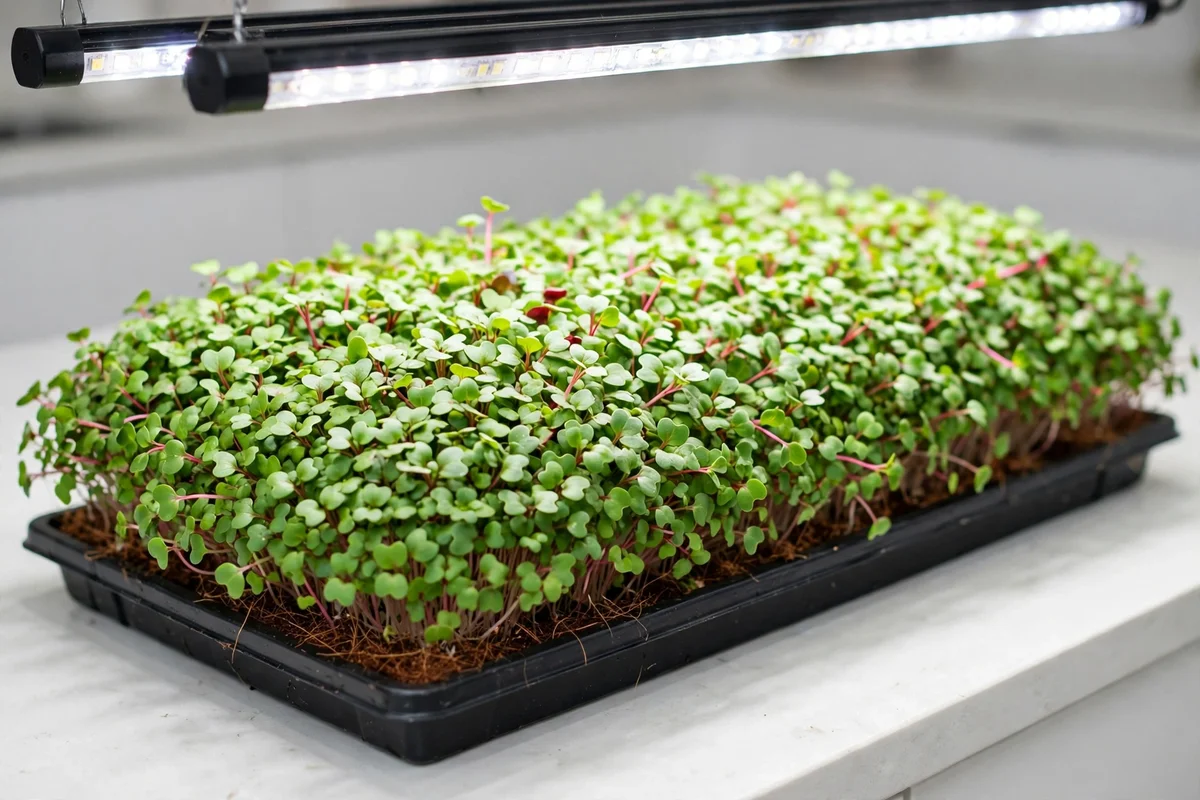
Mustard microgreens are the spicy tray in the lineup: sow today, harvest in 8 to 14 days. They grow 2 to 3 inches tall, with small round green leaves on thin pale stems, and they taste like a mild horseradish — peppery, bright, and fresh. Sow about 10 to 20 grams of seed dry per standard 10 x 20 inch tray, blackout 2 to 3 days under a light cover, give it 12 to 16 hours of light a day, and water from the bottom. Cut when the shoots are 2 to 3 inches tall and the seed leaves are fully open, before the first true leaves appear.
If radish is the fastest tray and sunflower the crunchiest, mustard is the one that wakes a sandwich up. The full setup is in the pillar guide: How to Grow Microgreens Indoors.
Why Mustard Microgreens Are Worth a Tray
- Big flavor, small tray. Mustard shoots carry a clean peppery heat, like a mild horseradish, without the bitterness of older mustard greens. A little goes a long way.
- Fast and cheap. Sowing to harvest is 8 to 14 days, and one tray needs only about 10 to 20 grams of seed — one bag lasts for tray after tray.
- Pretty on the plate. Red varieties such as Ruby Streaks grow deep burgundy leaves that finish a salad without any garnish.
- One clean cut. Mustard is a cut-once crop: harvest the whole tray at once, then compost the roots and sow again — a fresh tray every week keeps the supply steady.
What You Need
- Tray: One shallow 10 x 20 inch tray with drainage holes, nested in a second tray without holes for bottom watering. See Best Tray for Microgreens.
- Growing medium: Fine seed-starting mix or potting mix, 1 to 1.5 inches deep. Coco coir also works. See Best Soil for Microgreens.
- Seed: Mustard seed sold for microgreens or sprouting — about 10 to 20 grams (roughly 1 to 2 tablespoons) per full tray. Green mustard (Brassica juncea) is the standard spicy choice; white mustard (Sinapis alba) is milder; red varieties such as Ruby Streaks add color. Buy seed sold for microgreens or sprouting, never treated garden seed.
- Light: A south-facing windowsill can work, but an LED shop light 6 to 12 inches above the tray gives straighter, greener growth. See How Much Light Do Microgreens Need?.
- Cover tray plus a light weight (no more than 2 pounds) for the blackout stage — mustard stems are thin, and a heavy weight crushes them.
- Spray bottle and clean kitchen scissors.
Step-by-Step: Growing Mustard Microgreens
Step 1: Fill and Moisten the Tray
Fill the tray with 1 to 1.5 inches of mix, level it, and press it flat. Mist until evenly damp like a wrung-out sponge — dry pockets leave bare patches, and tiny mustard seed will not forgive a dry spot.
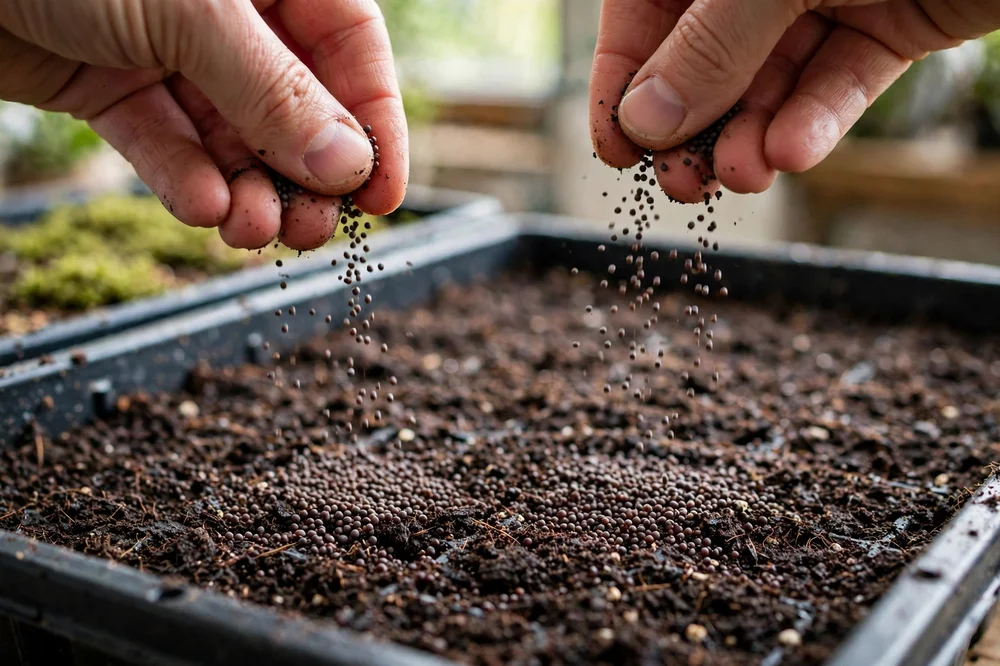
Step 2: Sow the Seed Dry — Do Not Soak
Scatter the seed evenly across the surface, about 10 to 20 grams for a full 10 x 20 tray, seeds close together but with tiny gaps between them so air can move. Press them gently into the surface so every seed touches the damp mix, then mist lightly.
Do not soak mustard seed first. Like chia, it turns gooey in water, and soaked seed clumps, rots, and germinates in patches. Sow it dry, straight from the bag.
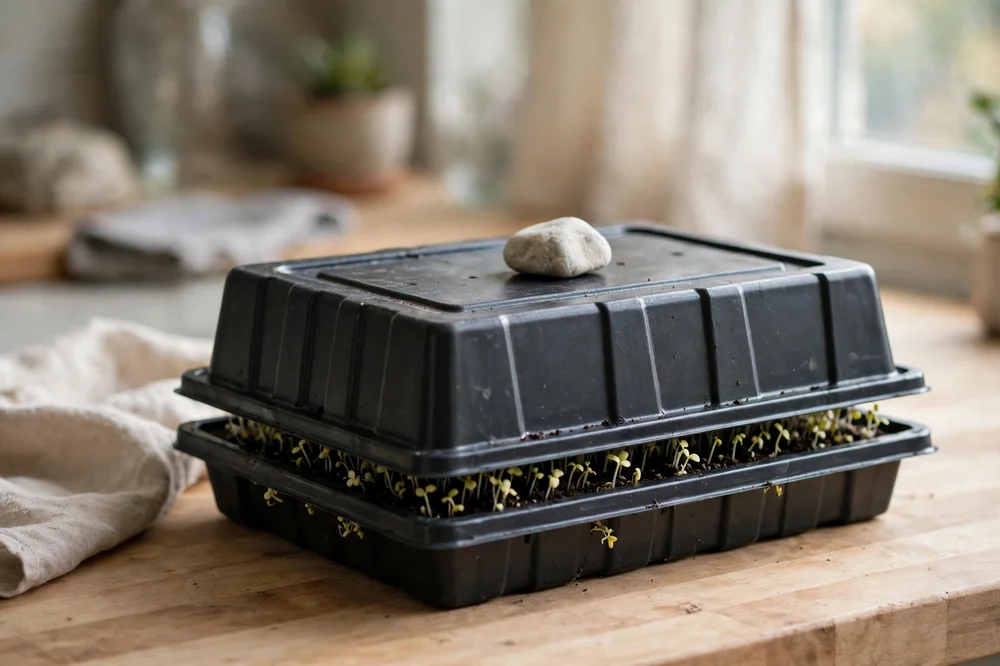
Step 3: Blackout for 2 to 3 Days
Place the second tray directly on top of the seed and add a light weight — no more than 2 pounds. Keep the tray in the dark at 65 to 75°F. Mist lightly once a day only if the surface looks dry; damp, never soaked.
By day 2 the seed has usually germinated, and by day 3 the pale shoots push the cover up. Do not leave the tray covered past day 3 or 4: shoots left in the dark stretch pale and leggy.
Step 4: Move to Light and Water From the Bottom
As soon as the shoots lift the cover, remove it and put the tray under light right away. Give the tray 12 to 16 hours of light per day, keeping the light 6 to 12 inches above the leaves. The pale yellow seedlings green up within a day.
Pour 1 to 2 cups of water into the bottom tray, let the soil drink for 10 to 15 minutes, then pour off what is left. Water once a day — bottom watering keeps the leaves dry, your main defense against mold. See Why Are My Microgreens Moldy?.
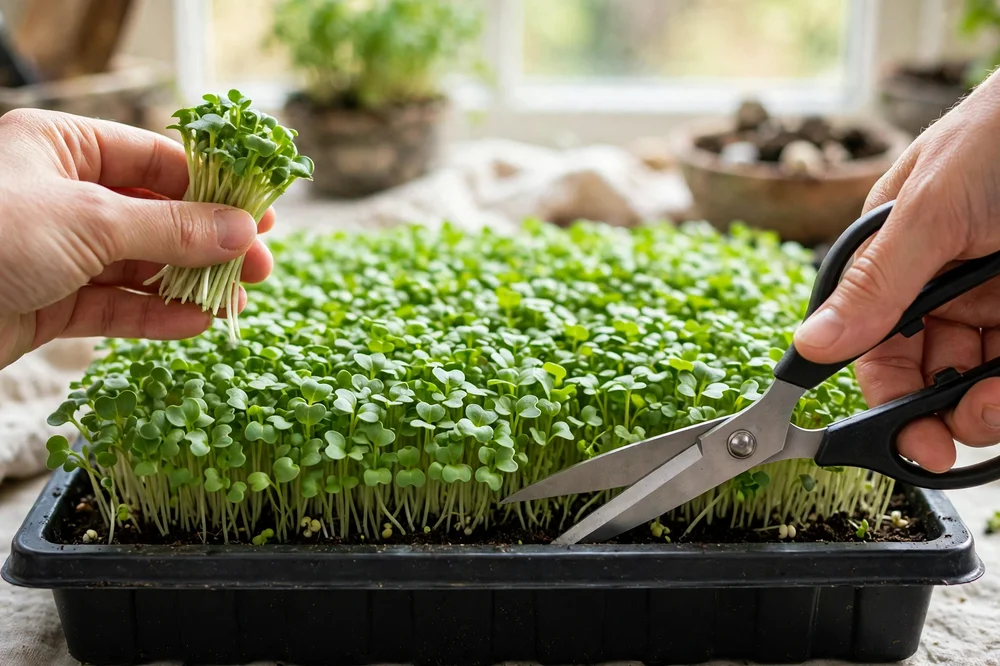
Step 5: Harvest on Day 8 to 14
Harvest when the shoots are 2 to 3 inches tall and the two seed leaves are fully open and bright green — usually day 8 to 14. Cut with clean scissors just above the soil line. Full technique is in When and How to Harvest Microgreens.
Cut before the first true leaves appear: once they form, the shoots turn tougher and much hotter. For a milder tray, cut around day 8; for full heat, wait until day 10 to 12.
Day-by-Day Timeline
- Day 0: Sow the seed dry, mist, cover, and add a light weight.
- Day 1–2: Germination under cover; tiny white roots push into the mix.
- Day 2–3: Shoots lift the cover — move to light at once.
- Day 3–8: Stems green up and thicken; seed leaves open fully.
- Day 8–14: Harvest window. Cut at 2 to 3 inches tall, before true leaves appear.
Which Mustard Seed to Grow
Green mustard (Brassica juncea) is the standard choice: reliable, evenly green, and properly spicy — start here if you have never grown mustard before.
White mustard (Sinapis alba) is milder and a little slower, ready in 7 to 11 days, with a softer, rounder flavor — for people who find green mustard too hot.
Red mustard, such as Ruby Streaks, grows deep burgundy leaves and a slightly sharper bite, ready in 8 to 10 days.
Whichever you choose, buy seed sold for microgreens or sprouting, never treated garden seed — if the bag does not say so, do not sow it.
Troubleshooting Mustard Microgreens
Seed clumped into gooey patches. The seed was soaked or misted too heavily. Mustard seed turns sticky in water — sow it dry, mist lightly, and leave small gaps between seeds.
Gray, webby mold on the soil. The seed was sown too thick, the tray stayed too wet, or there was no air flow. Sow one even layer with tiny gaps and water from the bottom only.
Leggy, falling-over stems. Too little light, or the tray stayed covered too long. Move it under a light 6 to 12 inches above the leaves as soon as the cover lifts.
Uneven germination. Seed was piled in spots or never touched the damp mix. Scatter evenly and press the seed gently into the surface.
Far too hot or bitter. Harvested too late, after the true leaves appeared. Cut on time, at 2 to 3 inches, before the true leaves show.
Using and Storing Your Harvest
Rinse only right before eating — washing then storing makes shoots go slimy. Keep the rest dry in a sealed container lined with a paper towel, in the refrigerator at 35 to 40°F, for 5 to 7 days. Full steps are in How to Store Microgreens After Harvest.
Mustard microgreens are best raw, where the heat survives: on sandwiches and burgers, tossed through salads, or piled on tacos. One full tray yields roughly 3 to 5 ounces; mustard does not regrow, so sow a new tray every week. If you liked the heat here, broccoli microgreens are the mild, everyday tray to grow next — and kale microgreens follow in this series.
Frequently Asked Questions
How long do mustard microgreens take to grow?
Eight to 14 days from sowing to harvest indoors, at 65 to 75°F with 12 to 16 hours of light a day. White mustard is a little faster, at 7 to 11 days.
Do I have to soak mustard seeds before planting microgreens?
No — do not soak them. Mustard seed turns gooey in water, clumps together, and rots. Sow it dry, straight from the bag.
How much mustard seed do I need per tray?
About 10 to 20 grams, roughly 1 to 2 tablespoons, for a standard 10 x 20 inch tray. Scatter evenly with tiny gaps between seeds.
How spicy are mustard microgreens?
Mildly hot, like a gentle horseradish — peppery and bright, not burning. Green mustard is the standard heat; white is milder, red a touch sharper. Cutting early, around day 8, keeps the heat gentle.
Will mustard microgreens regrow after cutting?
No. Mustard is a cut-once crop — the stem does not regrow after you cut it. Compost the roots, wash the tray, and sow again.