
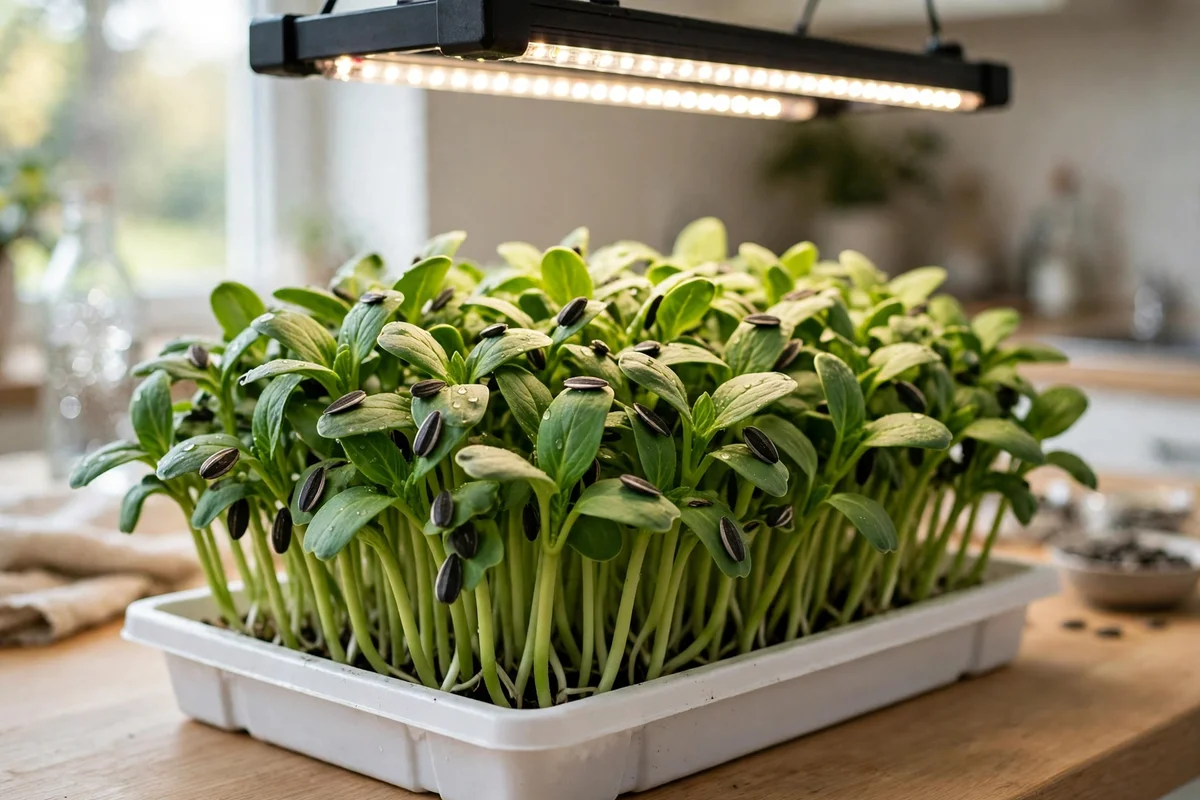
Sunflower microgreens are the crunchiest tray you can grow indoors: sow today, harvest in 8 to 12 days. They grow 3 to 4 inches tall, with thick, juicy stems and two broad green leaves, and taste nutty and fresh. Soak black oil sunflower seed 8 to 12 hours first, then sow about 1 to 2 cups per standard 10 x 20 inch tray, keep them in the dark under a weighted cover for 3 to 4 days, give them 12 to 16 hours of light a day, and water from the bottom. Cut when the shoots are 3 to 4 inches tall and most black hulls have dropped, before the first true leaves appear.
If radish is the fastest tray and pea shoots the tallest, sunflower is the most satisfying to eat: one tray fills a sandwich or a salad, and the stems stay crisp for days in the fridge. The full setup is in the pillar guide: How to Grow Microgreens Indoors.
Why Sunflower Microgreens Are Worth a Tray
- Big, crunchy harvest. Sunflower shoots are thick-stemmed and juicy, not delicate like broccoli. At 3 to 4 inches tall they eat like a vegetable, not a garnish.
- Nutty flavor. They taste like raw sunflower seeds — mild, nutty, and fresh — with none of the peppery bite of radish or mustard.
- Fast and forgiving. Sowing to harvest takes 8 to 12 days, and the large seed carries enough energy that germination stays strong even if your timing is a day off. They like 65 to 75°F, so a warm kitchen in winter suits them.
- One clean cut. Sunflowers are a cut-once crop: harvest the whole tray at once, then compost the roots and sow again — a fresh tray every week keeps the supply steady.
What You Need
- Tray: One shallow 10 x 20 inch tray with drainage holes, nested in a second tray without holes for bottom watering. See Best Tray for Microgreens.
- Growing medium: Fine seed-starting mix or potting mix, 1 to 1.5 inches deep. Coco coir also works. See Best Soil for Microgreens.
- Seed: Black oil sunflower seed, in the shell, sold for microgreens or sprouting — about 1 to 2 cups per full tray. Do not use striped seed: its hulls are thicker and harder to shed. Do not use bird seed: it may be old, dirty, or treated, and is not sold for eating.
- Light: A south-facing windowsill can work, but an LED shop light 6 to 12 inches above the tray gives straighter, greener growth. See How Much Light Do Microgreens Need?
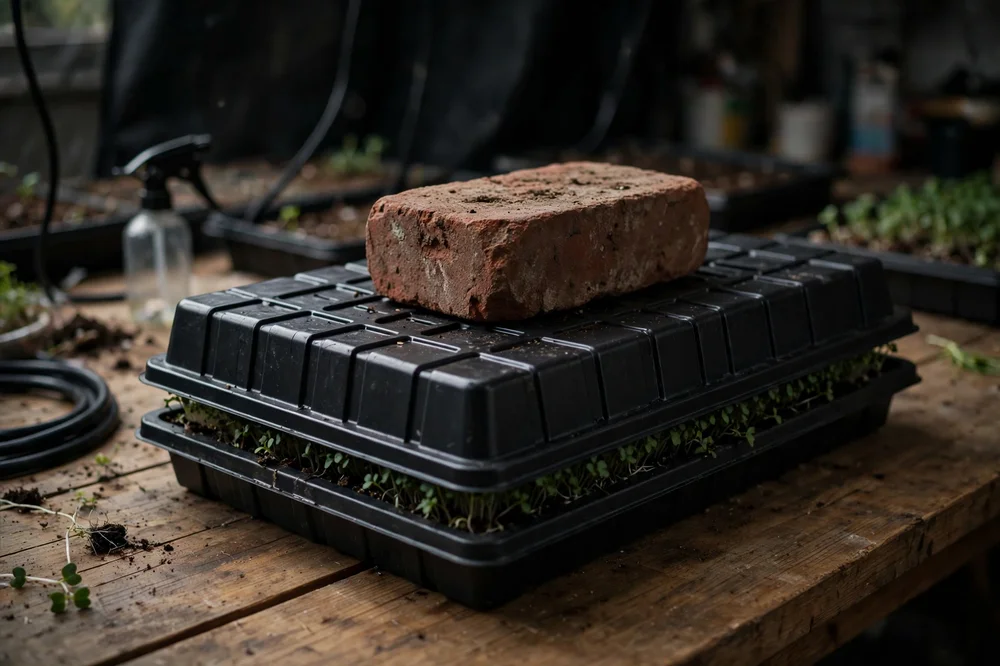
- Cover tray plus a heavier weight (5 to 10 pounds) for the blackout stage — sunflower shoots push hard, and the weight helps them shed their hulls.
- Spray bottle and clean kitchen scissors.
Step-by-Step: Growing Sunflower Microgreens
Step 1: Fill and Moisten the Tray
Fill the tray with 1 to 1.5 inches of mix, level it, and press it flat. Mist until evenly damp like a wrung-out sponge — dry pockets leave bare patches.
Step 2: Soak the Seed for 8 to 12 Hours
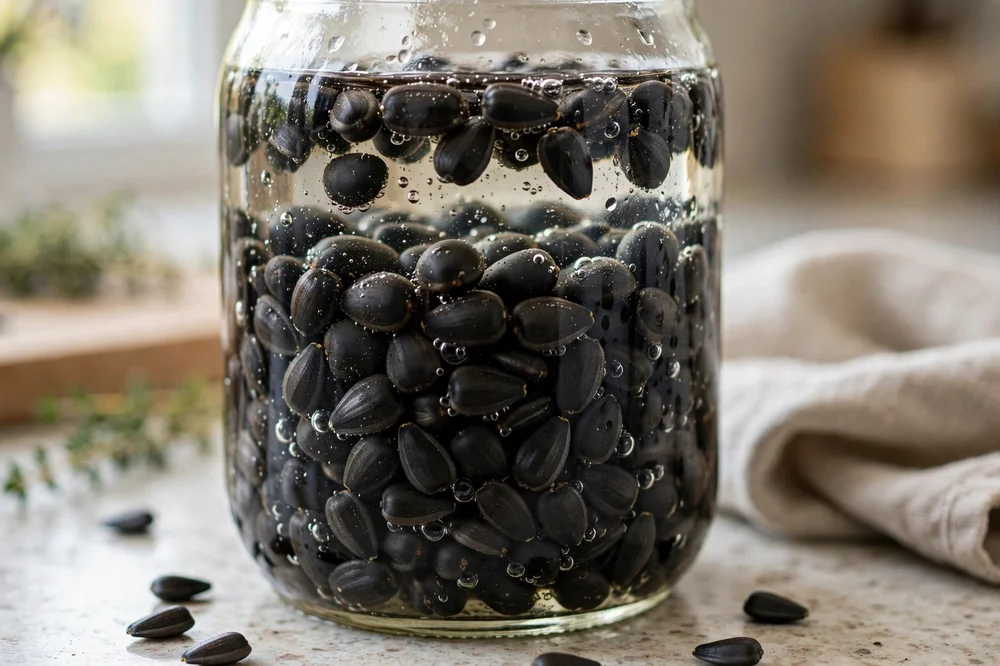
Put the seed in a jar or bowl, cover with room-temperature water, and leave it 8 to 12 hours — overnight is perfect — then drain well and rinse once. Soaking is essential: the hard hulls need water to soften, and unsoaked seed germinates slowly and patchily.
Step 3: Sow in a Single Even Layer
Spread the soaked seed in one even layer, edge to edge — about 1 to 2 cups covers a full 10 x 20 tray, seeds touching but never stacked. Press them gently into the surface so every seed touches the damp mix, then mist lightly. Piled seed is the fastest way to get mold.
Step 4: Blackout for 3 to 4 Days
Place the second tray directly on top of the seed and add your weight, 5 to 10 pounds. Keep the tray in the dark at 65 to 75°F. The weight presses the roots into the mix and helps the shoots push their black hulls off. By day 3 the shoots are usually lifting the cover; by day 4 they are about 2 inches tall. Do not leave them covered past day 4: shoots left in the dark stretch pale and leggy fast.
Step 5: Move to Light and Water From the Bottom
As soon as the shoots lift the cover, remove it and put the tray under light right away: 12 to 16 hours a day, keeping the light 6 to 12 inches above the leaves and raising it as the shoots grow. See How to Grow Microgreens on a Windowsill.
Pour 1 to 2 cups of water into the bottom tray, let the soil drink for 10 to 15 minutes, then pour off what is left. Water once a day — bottom watering keeps the leaves dry, your main defense against mold. See Why Are My Microgreens Moldy?
Step 6: Harvest on Day 8 to 12
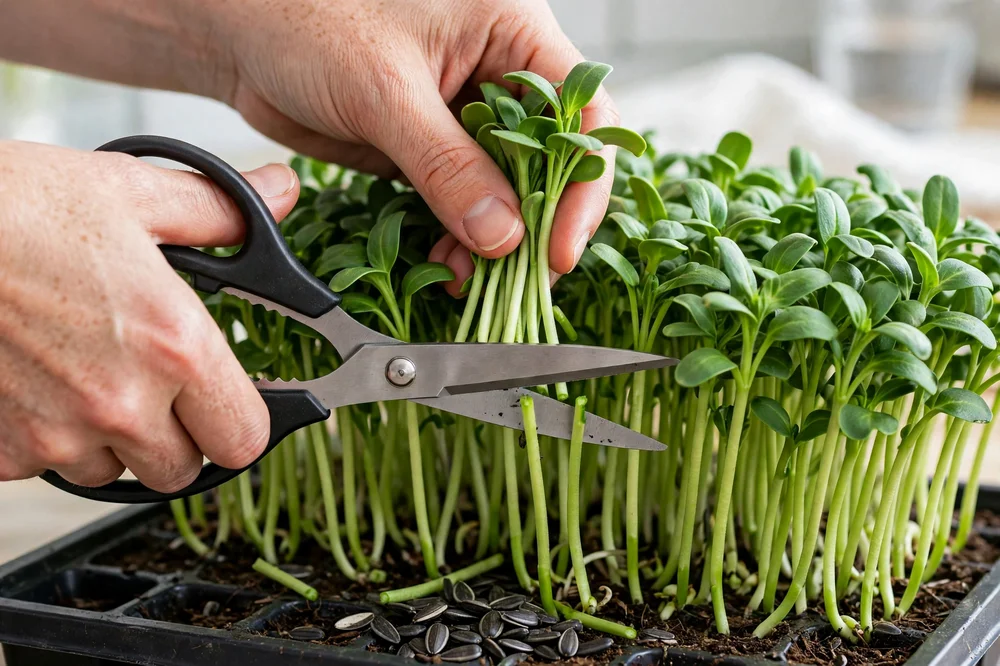
Harvest when the shoots are 3 to 4 inches tall, the two seed leaves are open and bright green, and most black hulls have dropped — usually day 8 to 12. Cut with clean scissors just above the soil line. Full technique is in When and How to Harvest Microgreens.
Cut before the first true leaves appear: once they form, the shoots turn tougher and more bitter. Rub off any hulls that still cling after cutting, and rinse only right before eating.
Day-by-Day Timeline
- Day 0: Soak the seed 8 to 12 hours, sow, mist, cover, and weight the tray.
- Day 1–2: Germination under cover; roots push into the mix.
- Day 3–4: Shoots lift the cover — move to light at once.
- Day 4–8: Stems green up and thicken; hulls drop off.
- Day 8–12: Harvest window. Cut at 3 to 4 inches tall, before true leaves appear.
Which Sunflower Seed to Grow
Black oil sunflower seed, in the shell, is the standard choice: the hulls are thin, they shed easily under weight, and the shoots are thick and sweet. Buy seed sold for microgreens or sprouting — never treated garden seed.
Striped sunflower seed has thicker, harder hulls that cling to the leaves. Bird seed may be old, dirty, or treated, and is not sold for eating.
Troubleshooting Sunflower Microgreens
Hulls stuck on the leaves. The tray was uncovered too early, or the weight was too light. Keep the weighted cover on for the full 3 to 4 days, and mist stuck hulls lightly — damp hulls slip off more easily.
Gray, webby mold on the soil. Seed was stacked, the tray stayed too wet, or there was no air flow. Sow in a single layer and water from the bottom only.
Leggy, falling-over stems. Too little light, or the tray stayed covered too long. Move it under a light 6 to 12 inches above the leaves as soon as the cover lifts. See Why Are My Microgreens Leggy / Falling Over?
Bitter, tough shoots. They were harvested too late, after the true leaves appeared. Cut at 3 to 4 inches, on time.
Yellowing leaves. Usually too little light or the tray stayed wet for days. The full list is in Why Are My Microgreens Turning Yellow?
Using and Storing Your Harvest
Rinse only right before eating — washing then storing makes shoots go slimy. Keep the rest dry in a sealed container lined with a paper towel, in the refrigerator at 35 to 40°F, for 5 to 7 days. Full steps are in How to Store Microgreens After Harvest.
Eat them raw, where the crunch survives: on sandwiches and wraps, tossed through salads, or piled on avocado toast. One full tray yields roughly 8 to 12 ounces; because sunflowers do not regrow, sow a new tray every week for a steady supply.
Frequently Asked Questions
How long do sunflower microgreens take to grow?
Eight to 12 days from sowing to harvest indoors, at 65 to 75°F with 12 to 16 hours of light a day, after an 8 to 12 hour soak.
Do I have to soak sunflower seeds before planting microgreens?
Yes — soaking is essential. Soak black oil sunflower seed 8 to 12 hours so the hard hulls soften and the seed germinates evenly.
Can I grow sunflower microgreens without soil?
Yes — sunflower microgreens grow well on coco coir or hemp mats, as long as the mat stays damp. See How to Grow Microgreens Without Soil.
Will sunflower microgreens regrow after cutting?
No. Sunflowers are a cut-once crop — the stem does not regrow after you cut it. Compost the roots, wash the tray, and sow again.
Can I use bird seed or striped sunflower seed for microgreens?
No. Bird seed may be old, dirty, or treated, and striped seed has thick hulls that cling to the leaves. Use black oil seed sold for microgreens or sprouting.